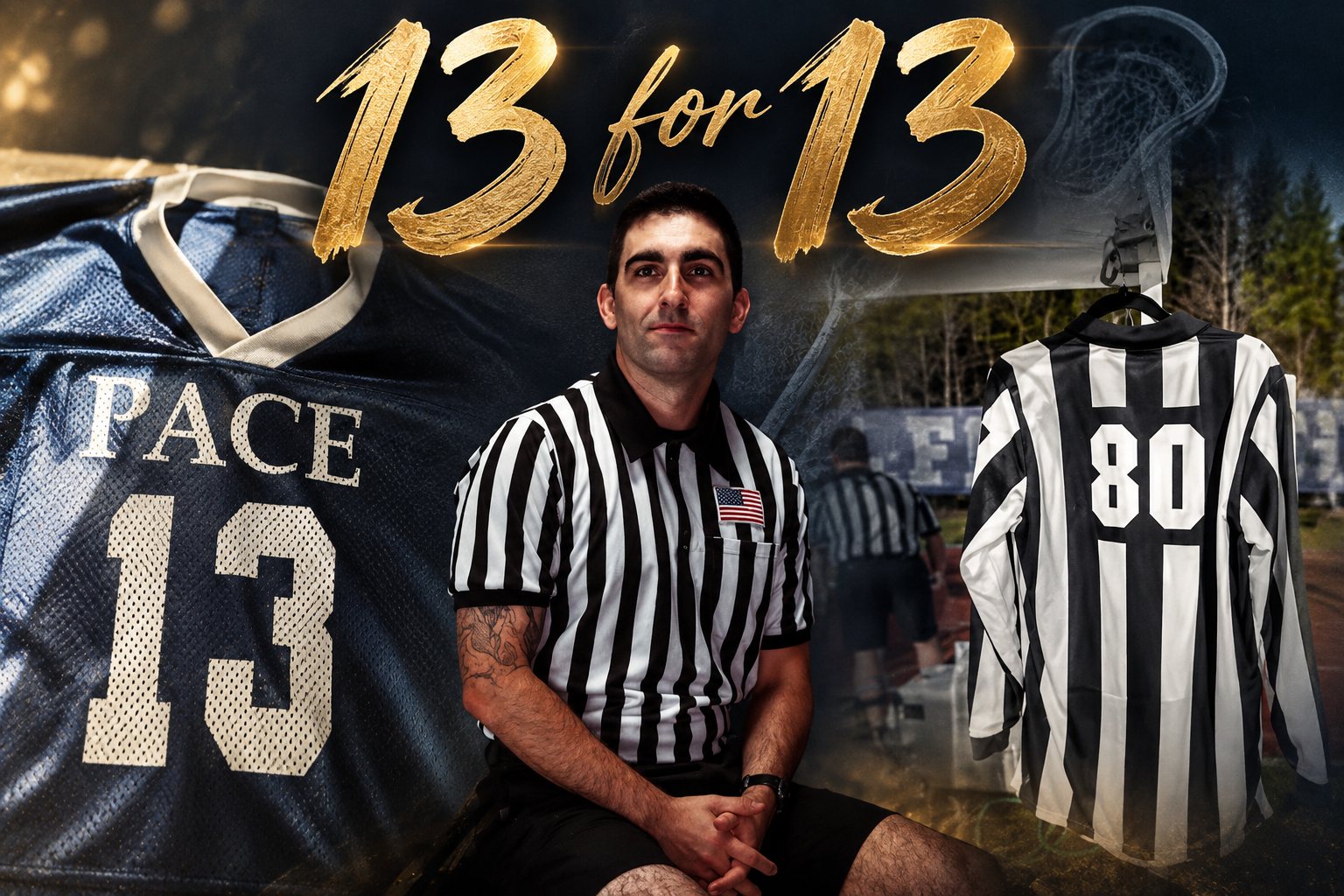
13 for 13: Thirteen Dollars, One Legacy, Countless Conversations

13 for 13: Thirteen Dollars, One Legacy, Countless Conversations

Sometimes something very small can carry tremendous meaning.

For our family, one of those things is the number 13.

Our son Gordon loved Number 13. He wore it proudly during his high school and college lacrosse days, and over time it became part of who he was.

Today, Gordon's No. 13 means something even greater to Mary Jo and me.

It represents his life.

His legacy.

His love of lacrosse.

His desire to help people.

And the message we continue to carry forward through the Gordon J. Corsetti Mental Agility Foundation:

Take Care of Your Crew.

That is why we created 13 for 13 last year when we surpassed our goal of $13,000 and received generous donations from around the globe totally almost $ 23,000.

The idea is intentionally simple:

Give $13 in honor of Gordon's No. 13 and help us continue the work he started.

What Can $13 Really Do?

Someone might reasonably ask:

What difference can thirteen dollars make?

By itself, maybe it doesn't seem like much.

But put hundreds of $13 gifts together and something happens.

A conversation gets started.

A student learns that asking for help is a sign of courage.

A coach learns how to recognize when one of his players may be struggling.

An official realizes that the person standing beside him may need someone to check in.

A parent begins a conversation with a son or daughter.

A young person hears four important words:

“You are not alone.”

That is how change begins.

One conversation at a time.

One person at a time.

Sometimes, $13 at a time.

Gordon's Number Has Become a Mission

When we began the 13 for 13 campaign, we established a goal of raising $13,000 to support Mental Health Awareness and Suicide Prevention.

But this campaign was never really about reaching a number on a fundraising thermometer.

It is about what that money allows us to do.

Since losing Gordon, I have had the privilege of meeting extraordinary people and organizations working every day to help others.

The Foundation has supported organizations involved in mental health awareness, suicide prevention, counseling, youth programs, athletics, community outreach, disaster relief, and programs designed to create connection and belonging.

We have traveled to schools.

We have spoken with coaches.

We have talked with athletes.

We have worked with officials.

We have met with mental health professionals.

We have participated in suicide-prevention programs.

We have brought organizations together that might otherwise never have met.

And sometimes we simply sit with people who understand grief because they are living it themselves.

Every one of those experiences reminds me why this work matters.

Take Care of Your Crew

Gordon gave us many things to think about, but perhaps nothing has stayed with me more than these five words:

Take Care of Your Crew.

Your crew doesn't have to be a lacrosse team.

Your crew is your family.

Your coworkers.

Your classmates.

Your neighbors.

Your friends.

Your coaching staff.

Your officiating crew.

Your teammates.

Your crew is simply the people around you and people you will meet in the future.

Taking care of them doesn't require a psychology degree.

It begins with paying attention.

Who has become unusually quiet?

Who hasn't been around lately?

Who seems different?

Who keeps saying, “I'm fine,” when something tells you they aren't?

Maybe you ask again:

“No, really. How are you doing?”

And then you do something increasingly difficult in today's world.

You listen.

The Five Pillars

Much of our Foundation's work centers around five areas that can help us build Mental Agility:

Faith: Having something bigger then you that helps you in good times and bad.

Purpose:

Having something meaningful that gives us a reason to get up in the morning.

Structure:

Creating healthy routines and habits that provide stability when life becomes difficult.

Social Engagement:

Building genuine relationships and resisting the isolation and loneliness that can become so dangerous.

Compassion:

Recognizing that everyone we meet may be carrying something we cannot see.

These aren't complicated ideas. But living them intentionally can change lives.

The Power of a Crew

One of the reasons I continue to believe so strongly in sports, and particularly lacrosse, is that a good team naturally provides many of these things.

Purpose.

Structure.

Relationships.

Accountability.

Belonging.

Someone notices when you don't show up.

Someone needs you.

Someone has your back.

And eventually you learn that being part of a team means having someone else's back too.  That lesson shouldn't end when the game ends.  We should carry it into our families, workplaces, schools, and communities.

More Than a Donation

So when you give $13 to Gordon's Mental Agility Foundation, I hope you understand that we see it as much more than a donation.

It is a statement.

It says:

Mental wellness matters.

Suicide prevention matters.

Connection matters.

People matter.

And Gordon's life matters.

Your $13 joins someone else's $13.

Then another.

Then another.

And eventually hundreds of small acts of generosity become something much larger.

They become education.

They become outreach.

They become conversations.

They become hope.

Gordon's Jersey

Gordon's No. 13 jersey remains incredibly meaningful to me as I see everyday hanging in my office.

When I see that number, I don't simply see a lacrosse jersey.

I see my son.

I see his smile.

I hear his voice.

I remember his intellect and curiosity.

I remember how deeply he thought about life.

And yes, I remember the pain he carried.

But I also remember the people he helped.

That is the part of his story we intend to continue.

We cannot change what happened on December 2, 2022.

But we can decide what we do today.

We can talk.

We can listen.

We can educate.

We can encourage.

We can check on somebody.

We can help someone find professional support.

We can take care of our crew.

Will You Join Us?

Our request is simple.

Give $13.

Give it in honor of Gordon.

Give it in honor of someone you love.

Give it for someone who is struggling.

Give it for someone we've lost.

Give it because you believe that mental wellness deserves the same attention we give physical health.

And after you make that $13 gift, I would ask you to do one more thing.

Reach out to someone.

Send the text.

Make the phone call.

Invite someone to lunch.

Ask the second question.

Listen.

Your $13 helps our Foundation continue the work.

Your conversation may help someone continue theirs.

That's what 13 for 13 is really about.

One number.

One son.

One legacy.

One conversation at a time.

Take Care of Your Crew.

Love MJ and Coach Lou

Please consider donating to the Gordon J. Corsetti Mental Agility Foundation to help us keep Gordon’s legacy alive.

Mental Agility Donation (Pay Pal)

ZEFFY Donation Option

Please consider donating to the Gordon J. Corsetti Mental Agility Foundation to help us keep Gordon’s legacy alive.

Call or text 988 for the Suicide & Crisis Lifeline for help. In an emergency, please call 911.
If you or someone you know is seeking help for mental health concerns, visit the
National Alliance on Mental Health (NAMI) website, or call 1-800-950-NAMI(6264).
For confidential treatment referrals, visit the Substance Abuse and Mental Health Services Administration (
SAMHSA) website, or call the National Helpline at 1-800-662-HELP(4357).

Call or text 988 for the Suicide & Crisis Lifeline for help. In an emergency, please call 911.
If you or someone you know is seeking help for mental health concerns, visit the
National Alliance on Mental Health (NAMI) website, or call 1-800-950-NAMI(6264).
For confidential treatment referrals, visit the Substance Abuse and Mental Health Services Administration (
SAMHSA) website, or call the National Helpline at 1-800-662-HELP(4357).
The Medicine Game: More Than a Game

The Medicine Game: More Than a Game

Lacrosse, Mental Agility, and Taking Care of Your Crew

During Suicide Prevention Awareness Month, I had the privilege of sitting down with my friend Jeremy Redmon, author of Tell the Kids I Love Them, for a conversation about something that has been an important part of both of our lives: lacrosse, mental wellness, connection, and healing. Many of our friends and associates gathered to hear our thoughts on the Medicine Game as well as our experiences with suicide. Most of this post centers around Lacrosse and Sports but I believe when you read this it can help anyone with their daily life.

Order copies of Jeremy’s book:

Amazon | Apple Books | Barnes & Noble 

Books-A-Million | Bookshop | USC Press  

A special thank you to my good friend Don Stoppenbach, who moderated our discussion and helped guide us through some meaningful, and at times difficult, conversations.

We called the evening The Medicine Game: Lacrosse, History & Healing.

The more I thought about our conversation afterward, the more I realized that the name captured exactly what we were trying to accomplish.

Lacrosse has always been about much more than a stick, a ball, a scoreboard, or winning and losing.

For generations, Indigenous peoples have regarded lacrosse as a game connected to community, spirituality, strength, and healing. That history gives us an opportunity to ask an important question today:

If lacrosse is the Medicine Game, where is the medicine?

I believe much of it can be found in the people.

The Medicine Is in the Community

Don began our conversation with an important question:

What does the phrase “Medicine Game” mean to each of us, and how can playing, coaching, officiating, or simply belonging to the lacrosse community contribute to healing?

I've spent most of my life around this game, as a player, coach, administrator, educator, and parent and now a mental health advocate.

I've experienced championships and heartbreaking losses. I've watched young men and women become adults. I've watched friendships develop that lasted decades.

And after losing my son Gordon, I've experienced the lacrosse community in an entirely different way. There is not a day that goes by that I receive a call, text email or a social post asking how our family is doing.

I've experienced people showing up.

Calling.

Listening.

Remembering.

Putting an arm around someone when there were simply no words that could make things better.

Sometimes that is the medicine.

PURPOSE — Why Do I Get Up in the Morning?

One of the five pillars of Mental Agility is Purpose. Along with Faith, Structure, Social Engagement and Compassion.

We asked:

How has lacrosse given us purpose during different stages of our lives? And what happens when an athlete loses that purpose because of injury, graduation, being cut, or simply leaving the game?

Athletics can provide tremendous purpose.

There's another practice tomorrow.

Another game this week.

Teammates are counting on you.

Someone needs you to show up.

But eventually every athlete plays his last game.

That transition can be difficult because sometimes we confuse what we do with who we are.

You aren't only a lacrosse player.

You aren't only a coach.

You aren't only an official.

You aren’t just a spouse

You aren’t just a parent.

You aren’t just a brother or sister

The challenge is taking everything the game taught you, discipline, teamwork, resilience, leadership, sacrifice, and discovering where those qualities can serve others next.

Your playing career may end.

Your purpose doesn't have to.

STRUCTURE — What Happens When the Schedule Disappears?

Another Mental Agility pillar is Structure.

Athletes, coaches, and officials live structured lives.

Practice at 4:00.

Lift at 6:00.

Film at 7:00.

Game Saturday.

Bus leaves at 8:00.

That structure can provide stability and rhythm, especially during difficult periods.

But what happens when the season ends?

Or when you graduate?

Or when injury takes the game away?

We talked about the importance of intentionally replacing lost structure.

Exercise.

Work.

Prayer/Meditation

Sleep.

Meals.

Relationships.

Volunteering.

A reason to get out of bed.

When an important chapter of life ends, we can't always control the loss.

But we can begin building the structure for the next chapter.

TAKE CARE OF YOUR CREW

Then we came to the words that mean so much to our family and Gordon’s Foundation:

Take Care of Your Crew.

Gordon's message sounds simple.

Living it requires intentionality.

What does taking care of your crew actually look like in a locker room, on a sideline, at work, or at home?

It means paying attention.

Maybe your teammate suddenly stops hanging around after practice.

Maybe an official you've known for years seems different.

Maybe your coach isn't himself.

Maybe your friend keeps telling everyone:

“I'm fine.”

But something tells you they aren’t.

Ask again.

“No, really. How are you doing?”

Gordon used to say to us, please ask me three times “How are you doing”. He empathized this because on the third time he would tell you the truth.

Then listen.

Taking care of your crew doesn't mean becoming someone's therapist. It means caring enough to notice and helping someone connect with appropriate support when they need more help than you can provide.

VULNERABILITY IS NOT WEAKNESS

Gordon talked about vulnerability and the importance of connection.

Why can athletes sometimes play through tremendous physical pain but struggle to tell someone they are hurting emotionally?

An athlete can tear something and immediately tell the trainer.

But someone can be hurting emotionally for months without telling anyone.

Why?

Sometimes we have confused silence with toughness.

I believe we need to teach young men and women something different:

Asking for help requires courage.

Vulnerability isn't surrender.

It is being honest enough to say:

“I'm having a hard time.”

And creating that culture begins with mothers, fathers, coaches, teammates, officials, and leaders being willing to have those conversations themselves.

MENTAL AGILITY DOESN'T MEAN LIFE WON'T HURT

Another important part of our conversation centered on what Mental Agility actually means.

It does not mean never experiencing difficult thoughts.

It doesn't mean disappointment disappears.

It doesn't mean anxiety, grief, pressure, or failure never enter our lives.

Mental Agility is about developing tools for how we respond.

Sports teach this constantly.

You turn the ball over.

What's next?

An official makes a call you disagree with.

What's next?

You lose a game.

What's next?

You don't make the team.

What's next?

You cannot always control what happens.

But you can work on controlling your next response.

That lesson reaches far beyond lacrosse or any life experience.

THE PEOPLE WE REMEMBER

What made that person special?

Interestingly, years later, we don't always remember the score of a game.

We remember how people made us feel.

The coach who believed in us.

The teammate who picked us up.

The person who noticed when we were struggling.

The leader who cared about us beyond what we could contribute to the team.

That's something every one of use should remember:

Coach the player. Care for the person.

COMPASSION AND TOUGHNESS

Compassion is another pillar of Mental Agility, yet competitive sports celebrate toughness.

So we asked:

Are compassion and toughness opposites?

I don't believe they are.

Compassion doesn't eliminate accountability.

You can love someone and still tell them the truth.

You can care deeply about a player and still demand more from them.

You can hold someone accountable without humiliating them.

In fact, some of the strongest leaders I've known have also been the most compassionate.

They demand excellence because they care.

Compassion without accountability can become permissiveness. Accountability without compassion can become cruelty. Great leadership requires both.

SOCIAL ENGAGEMENT — PERHAPS THE MOST POWERFUL MEDICINE

Our fourth Mental Agility pillar is Social Engagement.

This may be one of the greatest gifts sports provide.

We live in an era where someone can have hundreds or thousands of digital connections and still feel profoundly alone.

Teams create something different.

Face-to-face interaction.

Shared experiences.

Bus rides.

Locker rooms.

Meals.

Practices.

Laughter.

Failure.

Celebration.

Relationships.

Belonging.

Perhaps that's one of the reasons lacrosse can truly be medicine.

People need people.

SO WHAT IS OUR RESPONSIBILITY?

We finished with perhaps the most important question of the evening:

If we truly believe lacrosse is the Medicine Game, what responsibility do officials, coaches, players, parents, and alumni have to make sure the game leaves people healthier, more connected, more resilient, and more hopeful than when they entered it?

That question should challenge all of us.

Winning matters.

Competition matters.

Excellence matters.

But years after the final whistle, something else will matter more.

What kind of people did the game help us become?

Did we build relationships?

Did we help someone find purpose?

Did we create structure?

Did we bring people together?

Did we show compassion?

Did we notice the person who was struggling?

Did we make it acceptable to ask for help?

Did we leave the game and the people within it, better than we found them?

That is bigger than lacrosse.

That is the Medicine Game.

Five Words

I am grateful to Jeremy Redmon for sharing this conversation with me and for the deeply personal work behind Tell the Kids I Love Them.

And again, a heartfelt thank you to my good friend Don Stoppenbach for moderating our discussion and helping us explore these important questions with thoughtfulness and compassion. Don shared with our group that when his Father was dying from emphysema he went through photo albums and recorded his conversations with his Dad to learn some more about him and listen to his stories. I thought this was very poignant and a great example of making a human connection with friends and family.

Most importantly, I'm grateful that Gordon's message continues to travel.

It isn't complicated.

It doesn't require a degree.

It doesn't require you to be a mental health professional.

It requires us to notice one another.

To listen.

To ask another question.

To show up.

To care.

Five words:

TAKE CARE OF YOUR CREW.

If we can live those words, not simply put them on a shirt, a website, or a banner—then perhaps we can make our teams, our families, our workplaces, and our communities a little more connected.

And perhaps that is where the real medicine has always been.

Please consider donating to the Gordon J. Corsetti Mental Agility Foundation to help us keep Gordon’s legacy alive.

Mental Agility Donation

Call or text 988 for the Suicide & Crisis Lifeline for help. In an emergency, please call 911.
If you or someone you know is seeking help for mental health concerns, visit the
National Alliance on Mental Health (NAMI) website, or call 1-800-950-NAMI(6264).
For confidential treatment referrals, visit the Substance Abuse and Mental Health Services Administration (
SAMHSA) website, or call the National Helpline at 1-800-662-HELP(4357).
That's what friends are for - Part Deux

The string lights hanging overhead illuminated the dining room at Patrizia's, casting a warm golden glow over a crowd that felt far more like a family reunion than a fundraiser. Long tables draped in white linens were filled with familiar faces, friends from West Babylon, classmates from Marist University, family members, and my brothers from Shady Acres, a group bound together by decades of friendship, loyalty, and shared memories.

Each year, the Shady Acres boys gather for a week of golf, beach time, laughter, storytelling, and yes, a little harmless mischief. Sometimes our annual pilgrimage takes us to the Jersey Shore. Other years we head to upstate New York. This year, however, we returned home to Long Island, where Roger Coleman secured a beautiful house directly on the beach in Long Beach.

As always, the week was filled with old stories, new memories, and the kind of camaraderie that only develops over a lifetime.

When Tony first suggested hosting a fundraiser for the Gordon J. Corsetti Mental Agility Foundation at Patrizia's, I have to admit I was a little uncomfortable. Shady Acres has always been our special time together, a week to reconnect, recharge, and enjoy each other's company.

But if you know Tony, you know there is no such thing as a casual suggestion.

Tony lives by the motto passed down from his father:

"No Let Up."

Once he sets his mind on something, there is no stopping him.

Thankfully, he didn't let up.

From the moment guests arrived, Tony and his staff moved through the room with the effortless grace and generosity that define true hospitality. Every glass stayed full, every plate overflowed with incredible food, and every guest felt welcomed. They weren't simply hosting an event; they were helping preserve and extend Gordon's legacy.

As the evening unfolded, I found myself standing at the front of the room with a microphone in hand. The conversations softened, the laughter quieted, and for a moment the room became still.

I looked out at the faces before me, people who had helped carry Mary Jo and me through some of the most difficult days of our lives.

"I want to thank my family," I began. "My friends from West Babylon, my Marist brothers & sisters, and the guys who have always had my back."

My eyes moved across the room toward John, Tommy, Roger, and Tony, who stood nearby. Dave and Vince had already headed home for prior commitments, while Rick and Gerry were unable to attend, but all of them were very much present in spirit.

What struck me most was seeing people I had not seen in more than forty years. Yet somehow, as soon as we started talking and laughing, it felt like no time had passed at all.

My friend Megan Kelly captured the evening perfectly when she later wrote on Faceboook:

"Lou, your crew showed up! What a great night! So much love in the room with your family and friends. It was nice to see everyone that came out to honor your son Gordon. Thank you, Tony, for hosting in your beautiful restaurant. Love to all."

She was absolutely right.

The room was overflowing with love.

During my remarks, I briefly spoke about the Five Pillars of the Gordon J. Corsetti Mental Agility Foundation:

Video courtesy of Craig Rappaport https://tawprod.com/

• Everyone needs Faith
• Everyone needs Purpose
• Everyone needs Structure
• Everyone needs Social Engagement
• Everyone needs Compassion

These principles have become the foundation of our work and the framework through which we try to help others build resilience and hope.

Gordon's life was dedicated to lifting the stigma surrounding mental health and suicide. He believed deeply that vulnerability was not weakness but strength. He often spoke about what he called "Elite Vulnerability", the courage to be honest about struggles and the willingness to ask for help when carrying life's burdens becomes too heavy.

One of Gordon's favorite reminders was simple:

"You don't have to carry your sack of rocks alone."

Looking around the room that evening, I realized his message was alive and well.

It was present in every hug between old friends.

It was present in every shared memory between the West Babylon crew.

It was present in the laughter of the Marist alumni and the unwavering support of the Shady Acres brothers.

Most of all, it was present in the collective decision of everyone in attendance to show up, not just for me, Mary Jo and Caitlin, but for Gordon and the mission that continues in his name.

As the evening wound down and conversations returned to stories, jokes, and memories, I found myself reflecting on life's journey.

Like everyone else, my life has been filled with peaks and valleys, triumphs and heartbreaks. Yet throughout the evening, I could feel Gordon's spirit filling the room.

The gathering at Patrizia's wasn't simply about remembering a loss.

It was about celebrating a life.

It was about friendship.

It was about community.

It was about hope.

And it was about proving that the people who love us never truly leave us.

As I looked around the room one final time, I couldn't help but think of the old song that has comforted so many of us over the years.

Because on that night, surrounded by lifelong friends and family, it became abundantly clear:

That truly is what friends are for

Please consider donating to the Gordon J. Corsetti Mental Agility Foundation to help us keep Gordon’s legacy alive.

Mental Agility Donation

Call or text 988 for the Suicide & Crisis Lifeline for help. In an emergency, please call 911.
If you or someone you know is seeking help for mental health concerns, visit the
National Alliance on Mental Health (NAMI) website, or call 1-800-950-NAMI(6264).
For confidential treatment referrals, visit the Substance Abuse and Mental Health Services Administration (
SAMHSA) website, or call the National Helpline at 1-800-662-HELP(4357).
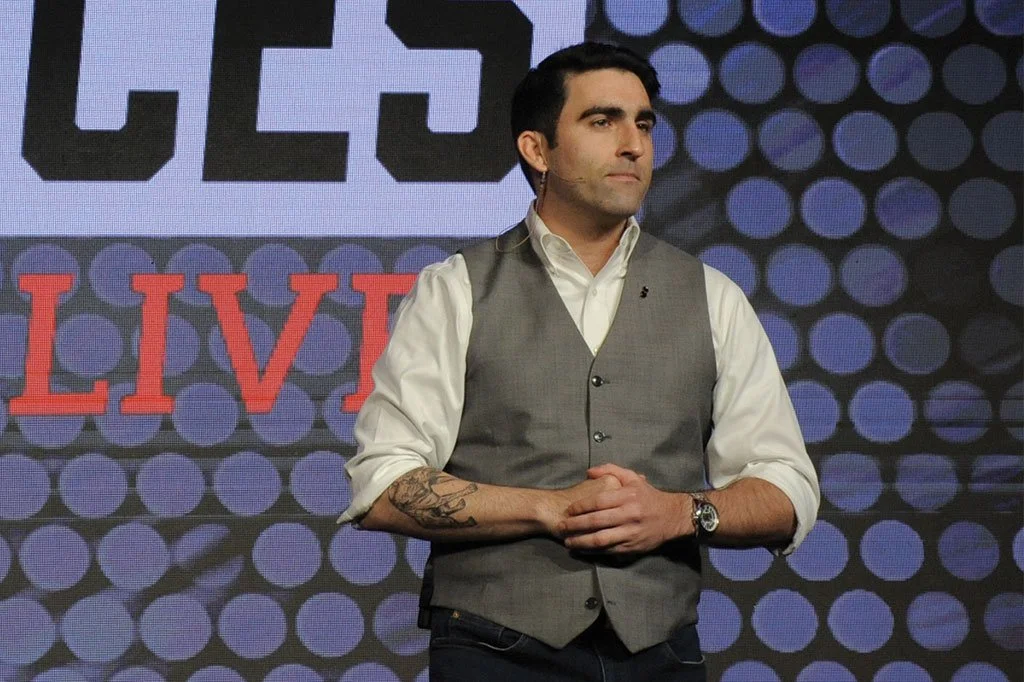
THE NCAA's

I can still remember when Gordon received his first NCAA lacrosse assignment and how excited he was. Like so many officials, he worked his way up through the ranks, starting as a youth official, then becoming a high school official, and ultimately earning the opportunity to officiate at the NCAA level. He loved the game, respected the craft of officiating, and worked tirelessly to improve every year.

One of his proudest accomplishments was receiving his first NCAA playoff assignment while working at USA Lacrosse in Baltimore. It was a significant milestone in a journey that he had earned through hard work, dedication, and a genuine love for the game.

During his time at USA Lacrosse, Gordon was fortunate to be surrounded by incredible mentors. His manager, Charlie Obermayer, was not only an outstanding leader but also someone who truly cared about Gordon as a person. Charlie understood Gordon's struggles with mental health and stood by him during difficult times. He was always in Gordon's corner, and over the years their professional relationship grew into a genuine friendship.

Gordon was equally blessed to learn from some of the most respected names in lacrosse officiating, including Walt Munze, Jim Carboneau, Al Blau, Matt Palumb, Mike Hyland, and of course Kevin Forster, who became one of Gordon's closest friends. Kevin is a straightforward, no-nonsense official affectionately known throughout the lacrosse officiating community as "The Dream Crusher." Naturally, Gordon eventually earned the nickname "Junior Dream Crusher."

For lacrosse fans, the final two weeks of the college season are sacred. The playoffs culminate on Memorial Day Weekend and the Final Four, the biggest stage in the sport for both the men's and women's Division I, II, and III championships. Those of us who are true lacrosse mavens never miss it. There is simply nothing else like it.

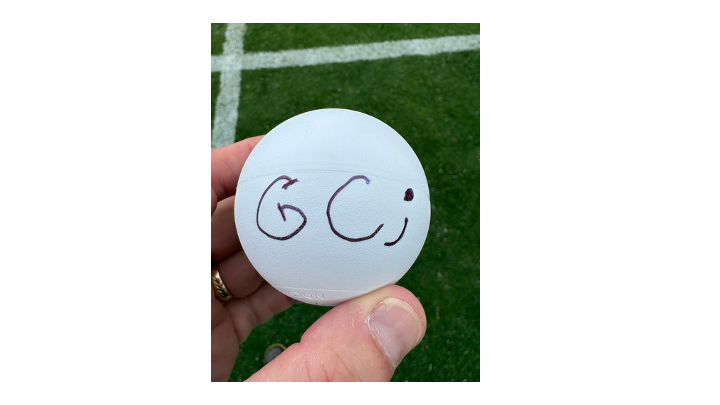
This year, Charlie did something incredibly thoughtful. He secured a game ball from the NCAA Men's Final Four semifinal between Princeton and Duke in Charlottesville, Virginia, and had Gordon's initials placed on it. The officiating crew for that game, Referee Joe Cieslak, Umpire Josh Blaisdell, Field Judge Dan Bennett, and Box Official David Taibl, all knew Gordon well. What made it even more special was that each of them wore Gordon's "Take Care of Your Crew" bracelets during the game.

Every week, I receive notes, emails, social media messages, and texts from people around the country, and often around the world, sharing stories about Gordon. They tell us how much he impacted their lives, how much they learned from him, and how deeply they miss him.

Those messages make me smile. They make me cry. Most of all, they remind me what a beautiful soul Gordon is. I rarely speak about my son in the past tense because his influence is still very much present in the lives of so many people.

Charlie's gesture filled my heart in a way that is difficult to describe. I have always believed that Gordon would have worked a Final Four and eventually a National Championship game. As his father, perhaps I am biased, but I also know how talented and respected he was. He was that good.

While Gordon is no longer with us physically, I have no doubt he was smiling down on that crew, proud of the game they were working and wishing them all a great day on the field.

Charlie, thank you for this incredible tribute to Gordon. It meant more to our family than you will ever know. Moments like these remind us that Gordon's legacy continues to live on through the people he influenced, the friendships he built, and the lessons he shared.

And perhaps no lesson was more important than the one he repeated so often:

"Take Care of Your Crew."

Please consider donating to the Gordon J. Corsetti Mental Agility Foundation to help us keep Gordon’s legacy alive.

Mental Agility Donation

Call or text 988 for the Suicide & Crisis Lifeline for help. In an emergency, please call 911.
If you or someone you know is seeking help for mental health concerns, visit the
National Alliance on Mental Health (NAMI) website, or call 1-800-950-NAMI(6264).
For confidential treatment referrals, visit the Substance Abuse and Mental Health Services Administration (
SAMHSA) website, or call the National Helpline at 1-800-662-HELP(4357).
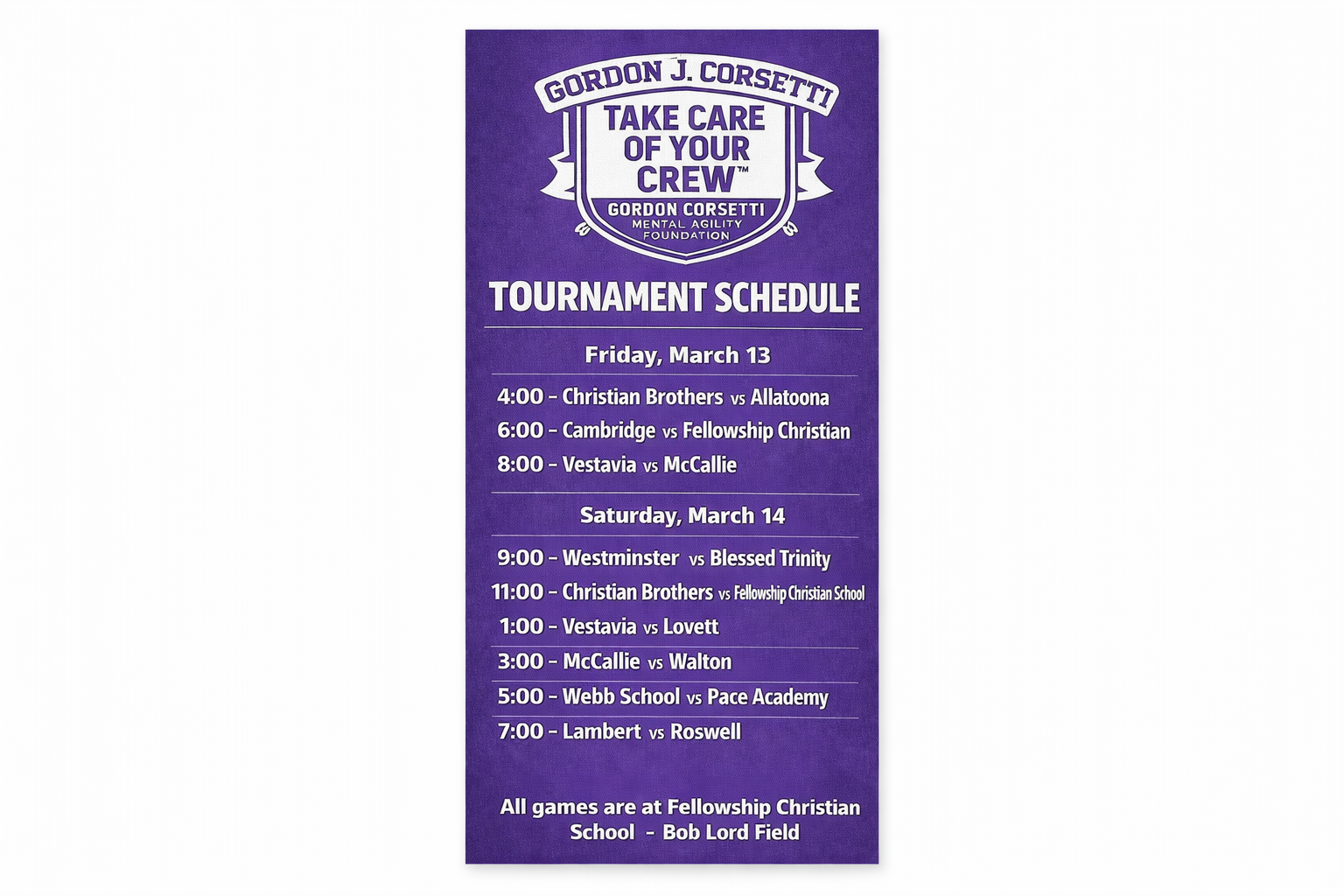
Gordon J. Corsetti - Mental Agility Lacrosse Tournament

FOR IMMEDIATE RELEASE

Tri-State Lacrosse Community Unites for the Gordon J. Corsetti Mental Agility Tournament to Champion Mental Health Awareness

ATLANTA, GA — The Gordon Corsetti Mental Agility Foundation is proud to announce its premier annual fundraiser, the Gordon J. Corsetti Mental Agility Lacrosse Tournament. Bringing together high school teams from Alabama, Georgia, and Tennessee, the event serves as a powerful tribute to Gordon’s enduring legacy as an athlete, official, and mental health advocate.

The tournament is more than a competition; it is a mission-driven gathering designed to honor Gordon’s profound love for the "creator’s game" while raising critical funds for suicide prevention and mental health resources. As the Foundation’s largest fundraising effort of the year, 100% of the proceeds will go toward providing tools, workshops, and support for individuals navigating clinical depression, anxiety, and suicidal ideation.

"Gordon believed that mental agility, the ability to attack depressed thoughts and gain mastery over the mind, was a skill that could be taught, much like the fundamentals of lacrosse," said Lou Corsetti, President of the Mental Agility Foundation. "By bringing together the lacrosse communities of three states, we are not just playing a game; we are carrying Gordon’s light and ensuring that no one has to fight their internal battles alone."

A Legacy of Resilience Gordon Corsetti was a prominent figure in the lacrosse world, known for his "Elite Vulnerability" and his work as a high-level official. Having lived with clinical depression and generalized anxiety disorder, Gordon dedicated his life to sharing methods, such as breathwork, mindfulness, and cognitive behavioral tools, to help others live more fulfilling lives. This tournament embodies his vision of staying "calm and grounded in any situation," whether on the field or in life’s most difficult transitions.

Event Highlights:

  • Regional Competition: Featuring top-tier programs from across the Southeast (AL, GA, TN).

  • Mental Agility Education: On-site resources and information regarding suicide prevention and the "7th Shelf" tools for mental resilience.

  • Community Impact: All funds raised will support the Foundation’s mission to provide information, tools, and hope to those facing mental health challenges.

About the Gordon Corsetti Mental Agility Foundation The Gordon Corsetti Mental Agility Foundation is a non-profit organization committed to mental health awareness and suicide prevention. Grounded in Gordon’s vision, the Foundation provides resources and different methods of thinking to help those with and without mental illness navigate life with mastery and hope. For more information, tools, or to make a donation, please visit mentallyagile.com.

Please consider donating to the Gordon J. Corsetti Mental Agility Foundation to help us keep Gordon’s legacy alive.

Mental Agility Donation

Call or text 988 for the Suicide & Crisis Lifeline for help. In an emergency, please call 911.
If you or someone you know is seeking help for mental health concerns, visit the
National Alliance on Mental Health (NAMI) website, or call 1-800-950-NAMI(6264).
For confidential treatment referrals, visit the Substance Abuse and Mental Health Services Administration (
SAMHSA) website, or call the National Helpline at 1-800-662-HELP(4357).

Stepping up with Sigma Chi

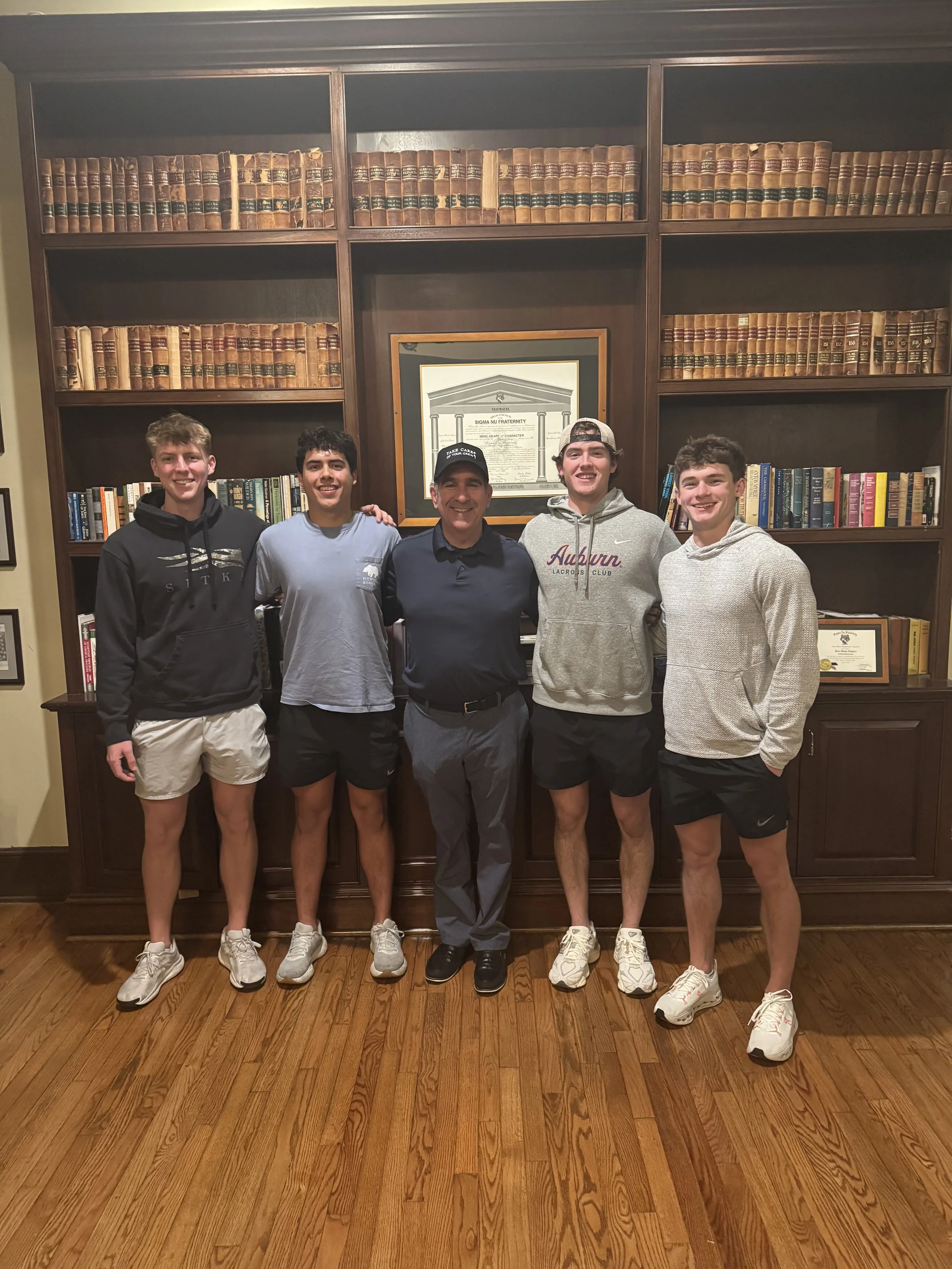
I had the incredible honor of speaking to over 200 fraternity brothers at the University of Georgia on October 6th, and I continue to be amazed by the way young people are stepping up to support each other in regard to mental health.

Gordon had the privilege of speaking with this same group twice, thanks to Cooper Heath and his fraternity, Sigma Chi. They tragically lost one of their brothers, Sam L. Asbury, who died by suicide in 2020. Cooper, who Gordon coached on our first Atlanta Coyotes team, immediately bonded with Gordon as fellow defensemen. Cooper is truly one of the nicest young men you’ll ever meet—someone who always strives to do the right thing. While he still calls me "Coach" instead of "Lou," I’m proud to call him a friend.

When I spoke to the group, I shared two key messages:

  1. Gordon’s Story and the profound impact he had on so many lives.

  2. The importance of embracing Gordon’s motto: “Take Care of Your Crew.” Gordon believed passionately that we must always take care of each other—whether that’s family, co-workers, officials, coaches, teammates, or fraternity brothers. It’s about creating a community that looks out for one another, no matter the situation.

Being in front of this group of young men gave me hope that they will continue supporting each other through their mental health journeys. I was particularly inspired to see Cooper and his fraternity raise over $200,000 through their annual event, “The Fight Against Suicide.” This incredible event sees fraternity brothers train and step into the boxing ring to "Knockout Suicide," raising awareness and combating the stigma surrounding mental health and suicide.

To close my speech, I shared a few quotes with the group—words that I hope they’ll carry with them as they make decisions each day:

  • “Be yourself, everyone else is taken.” —Charles Schulz (Peanuts Creator)

  • “Be smart about being stupid.” —Coach Lou

  • “No one ever drowned in sweat.” —Lou Holtz (Famous Football Coach)

  • “Do your best, let God do the rest.” —Unknown

  • “It’s OK not to be OK.” —Gordon James Corsetti

I left UGA feeling hopeful and proud, knowing that this next generation is committed to breaking the silence around mental health and supporting each other, just as Gordon always encouraged.

Thank you Cooper and Sigma Chi for allowing me to be part of your Crew

That's what Friends are for!

Every year, my brothers from the Marist College aka Shady Acres Class of '82 and I get together for beach time, golf, and some shenanigans. All we do is laugh and make fun of each other, and by the end of the three days, our ribs and jaws hurt from all the love and laughter we share. The stories continue to be embellished, and we always seem to score more points, tackles, or touchdowns as the years pass.

Tom Cooney, our event coordinator; Vince Ambroselli, our DJ; Rick Baretta, our cooler man; Roger Coleman and Jerry McElduff, our wine distributors; John Levy, who only brings his surfboard and dessert; and Tony Luisi and myself, who double as the chefs, make up our group.

These men are all terrific individuals who have made their mark in their communities, whether it is through their church groups, coaching youth programs, fundraising for various events, or just being great husbands and fathers.

All of us would do anything for each other, and they have. Each and every one of these men has helped Mary Jo, Caitlin, and me through the toughest challenge we have ever faced. From a friendly text or call, a heartfelt email, to their generous donations to Gordon’s Mental Agility Foundation, their support has been unwavering.

I am not sure how I would survive without their love and support.

I still have many friends that I talk to and see from high school, work, and my coaching tree. Because I have coached so many kids over the years, my friend network gets bigger and bigger, and for that, I am blessed. It’s a strange dynamic when you go from Coach to Lou when the kids I coached, coached with, or coached against become lifelong friends. Their parents have become friends, and I am very close to many of them in my over 40 years of coaching.

It is so nice to be invited to a wedding or see baby pictures or pictures of their new house.

Several years ago, my good friend and coaching buddy, Paul Wendlant, passed away. His son Christian (who played for me, was the all-time leading scorer at our school, and is now coaching in Colorado) called me a month before he discovered he had cancer. Christian asked if I knew any doctors who could help him get out of the hospital. Mind you, this was during the pandemic, and they did not know what Paul had. We were able to get him transferred to another hospital, and that’s when they discovered his illness.

The ironic part of this tragedy is a week before Christian called, I was driving in my truck and I thought, "I have to call Paul as I had not spoken with him in a while." Well, time passed as I was driving, and something else came up, and I forgot to call. Boy, do I regret that decision.

At Paul’s memorial service, Christian asked me to say a few words and repeated this story. If someone comes into your mind, “Make the call.” I have lived by this since Paul left us, and anytime I think of someone I love and care for, I call them. Everyone reading this blog should do the same: “Make the call.”

It is so important to make the human connection with everyone we come in contact with. Social media helps, texts, phone calls, and in-person interactions are extremely helpful to each and every one of us, especially with the ones we are close to.

Gordon, though challenged with anxiety, panic attacks, and severe depression, tried his best every day to make a difference in people's lives, and that’s why we all continue to keep his memory and legacy alive through his website and foundation.

Love to all of you, and “Take care of your crew” and also “Make the call.”

Please consider a donation to The Gordon Corsetti Mental Agility Foundation.

Gordon James Corsetti Foundation

All about the Hug!→

For those of you who know my son Gordon, he is a tremendous hugger. Now, Gordon did not go around hugging everyone he saw, if that's what you think. Gordon was a very reserved person in my view, but when he hugged you, he meant it. The hug is what prompted me to write this post this morning.

On March 15th and 16th, 2004, we had a Lacrosse Tournament for Gordon’s Mental Agility Foundation where people from all over the country came in to honor Gordon’s legacy and help raise money for mental health. There are so many people to thank, which I will get to in a moment.

First, I would like to thank the players, coaches, parents, fans, and officials from all the teams that participated: Christian Brothers (Memphis), McCallie (Chattanooga), Mountain Brook (Birmingham), Charlotte Catholic (Charlotte), and all of our local teams, Pace (Gordon’s alma mater), Pope, Lovett, Blessed Trinity, Oconee, Cambridge, and the Girls and Boys Teams from Fellowship Christian School. The competition was fierce, and everyone really enjoyed the message of "Take Care Of Your Crew."

Hugs were given in the stands, on the sidelines, and at midfield with our honorary coin flippers at the start of each game and at the banquet we had at our clubhouse when the last game was finished—for people that we as a family have not seen since we lost Gordon.

Mary Jo wore Gordon’s officials jersey, and we hung his college officials jersey on the sidelines at the scorers table. Two of our high school buddies, Vinny Pariso and Bob “Woody” Kerzner, made the trek from Long Island (West Babylon Eagles). We were graced with my great friend Frank Cecere, “Team Eight,” where we all played high school football. Dennis Gaddy, a great basketball player from high school attended and now lives in Atlanta. Mary Jo and Dennis were good friends growing up, and it was so nice to see him.

Kevin Forrester, Charlie Obermayer—Gordon’s mentors in the officiating world—came in from Baltimore along with my manager Steve Kirr, who is also a very close and dear friend. Kevin, Charlie, and Steve have been rock-solid during our time of need, and the prayers, support, and LOVE they have shown us are immeasurable.

Don Stoppenbach, my friend for over 25 years, ran the show from the press box (along with Scott Ferraro). Don also wrangled people from the US Lacrosse Youth Council, which I was part of for ten years. Trust me when I tell you that I could write a book about the Youth Council that would fill volumes of pages with our shenanigans (mostly all started by Don, I might add). The Youth Council, before US Lacrosse had over 90 employees, was the backbone of our sport helping grow the game across the country. These people are giants and terrific ambassadors of the game. Patty Brooks (Dallas), Mellisa D’Angelo (Long Island), Abby Burbank (Vermont), Tucker White (Florida via Baltimore), Noel Ebner (Upstate New York), Joanna Thomashefski (Michigan), and Maria Badalamenti (Atlanta - honorary Youth Council member).

Seeing the smiles on their faces over the weekend was tremendous and it brought back some wonderful memories.

The event was supported by all of my players and their parents (ticket sales, concessions, parking, cleanup). Special thanks to our Head of School Dr. Kathryn Teston, Athletic Director David Lowery, Assistant AD Andy Trevers, Maureen Boomhouwer, Cheryl Wade, Tori Mauldin, Rebecca Hurd, and all of our vendors the Bearor Family, Haynes Family, Elphick Family for setting up shop in our vendor village and running the silent auction. We don’t have the final tally yet, but between ticket sales, officials' fees, auction items, and donations I believe we raised close to twenty thousand dollars.

So, back to the hug!

Mary Jo and I have seen literally thousands of kids and their families, having run Atlanta Youth Lacrosse for twenty-seven years. Caitlin and Gordon were around the sport and it’s where they learned a great deal about work ethic and how to do things on their own. Mary Jo, who is a carpenter (her name is derived from Mary and Joseph), had our players (STARS - Students That Accept Responsibility) build many projects over the years at Murphy Chandler Park and Windsor Parkway. Seeing these young people who played, officiated, coached with us over that time was so awesome and HUGS were given out all day long.

As I mentioned earlier, when you got HUGGED by Gordon, he meant it, and all the HUGS that we received meant so much to us and frankly, it’s what keeps us going each and every day.

You all mean the world to us, and I can’t wait to see you and HUG you!

Coach Lou

Please consider donating to Gordon’s Mental Agility Foundation so we can continue to help people with their mental health. https://everloved.com/life-of/gordon-corsetti