Tuesdays in the Toolkit

Tuesdays in the Toolkit

Mirror Therapy is a potent, introspective tool. I like to have a mirror directly in front of me, and one off to the side. This allows me to speak to myself, and also catch side glances of my reactions along my periphery. The first time I tried this, I spoke to myself from two drastically different perspectives - the depressed me, and the “normal” me.

Read More

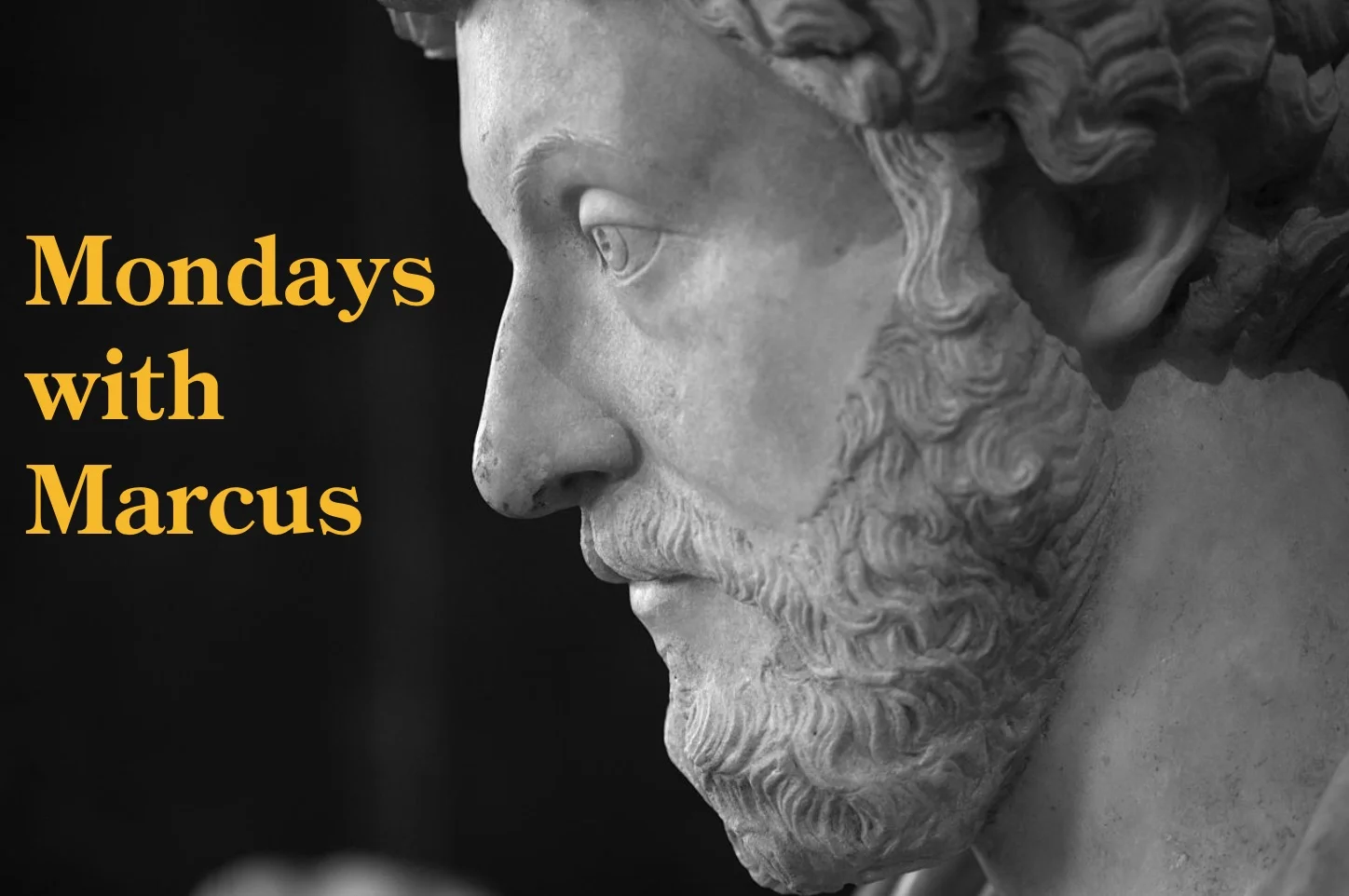
Mondays with Marcus

Mondays with Marcus

The more I study mental illness and the structure of the brain, the more I am enticed about how the mind thinks. I know from experience that I can train my mind to recognize distorted thoughts, and take action to think differently, but I have been unable to discern a guiding framework. I have many tools, but where is my toolbox?

Read More

How to Talk to (your family member, friend, coworker)

How to Talk to (your family member, friend, coworker)

Imagine if I lose a leg, and my friend kicks my stump in the middle of a conversation. I would be indignant, and he would no longer be my friend. My friends, family, and coworkers do not know if some off-hand comment will kick my invisible stump. We tiptoe around mental illness because we do not know if what we say will cause more damage. That is the unique dilemma of mental illness compared to physical illness.

Read More

Virtues of the Whiteboard

Virtues of the Whiteboard

In my free time, I will be exploring more about Stoic philosophy, and how it can be applied to modern living and my permanent recovery from mental illness.

For my blog, each Wednesday I will share some of my whiteboard, and we’ll see if we make any discoveries, together.

Read More

Shades of Grey: Perceiving Nuance in an Increasingly Binary Society

Shades of Grey: Perceiving Nuance in an Increasingly Binary Society

I invite you to adopt a depressed mindset, and examine something or someone that bothers you. Then step back, squint, refocus, and see if you can find a more nuanced perspective. You will realize that this black and white thinking is a complete crock.

Read More

Clear the Fog of War

Mondays and Thursdays are my best days, but Tuesdays afternoons and Saturday evenings are difficult for me.

February and March are when I feel the very best, but I tend to slip into a mild depression at the end of the lacrosse season in May.

I am more productive in the summer, but I am usually affected by Seasonal Affective Disorder, SAD, in the late fall.

How do I know all this? I tracked my mood twice a day for two years with an app, iMoodJournal. Every week, I reviewed the data and noted low and high days. Then I recalled what happened on those days, and, very slowly, the bigger picture revealed itself to me.

Before I tracked my mood, I assumed that my depressive episodes were sporadic and random. Because of that, I further assumed that they were beyond my control. I felt trapped in a mental “fog of war,” a term that means, “uncertainty regarding one's own capability, adversary capability, and adversary intent during an engagement, operation, or campaign.”
“Can anyone see the enemy?”

“Can anyone see the enemy?”

It is terrifying, stumbling around in the dark; knowing an enemy lurks nearby. It is even more terrifying when the enemy is your own mind.

After my hospitalization in the fall of 2016, I decided to map my mind as well as I could. iMoodJournal and PocketCBT were tools I used to spy on my internal enemy that was intent on doing me harm.

By identifying the times when depression or anxiety were most likely to launch an assault; I had time to dig a mental foxhole.

I could gather supplies and call in reinforcements. All of this gave me the mental ability to say to my depression and anxiety:

“Come Get some!”

I do not win every battle, but I no longer feel like I’m losing the war. There is immense psychological relief that comes from preparation. Whether that is rehearsing a presentation, doing breathing exercises, or telling your friends, “It’s almost winter, I may need you on some bad days,” you bolster your defenses.

While we cannot control our circumstances, we can control our reaction to them. If we have a good idea of when circumstances will change, we can be prepared and be even more in control of ourselves.

fortress.jpg